In 1996, the ISO 14001 Environmental Management System (EMS) standard was implemented and published. Since its publication, more than 300 000 organisations worldwide have implemented it. So far, organisations in 171 countries have been ISO 14001:2015 certified. The increasing popularity of the ISO 14001:2015 standard demonstrates that any organisation or business sector can benefit from the positive impact it offers. Due to companies’ own positive experiences, many ISO 14001:2015 certified companies are also requesting their suppliers obtain this certification, predominantly in resource conservation, energy, and waste management.

ISO/IEC 17021:2015 vs ISO/IEC 17065:2012 – What is the difference?
ISO/IEC 17021:2015 Conformity assessment — Requirements for bodies providing audit and certification of management systems is a standard that was created for evaluating certification bodies. This International Standard facilitates Certification Bodies to perform conformity assessments for the acceptance of their certifications on a national and international basis. This standard makes it easier to recognise management system certification in the interests of international trade.
ISO/IEC 17025:2017 – General Requirements for the Competence of Testing and Calibration Laboratories
ISO/IEC 17025:2017 specifies the general requirements for the competence, impartiality, and consistent operation of laboratories. To assure testing quality and validity, laboratory-developed procedures are used. This standard applies to all organisations that undertake laboratory operations, regardless of staff size or breadth of testing and calibration processes. ISO/IEC 17025:2017 is used by laboratory customers, regulatory agencies, organisations, and programs that employ peer-assessment, accreditation bodies, and others use ISO/IEC 17025:2017 when confirming or recognising the competence of laboratories.
Promotion of Access to Information Act – Do you have access to all your personal information?
There is a lot of personal information that is processed and retained by public and private bodies. Such records are kept safe and secure for decades, but do all South Africans have access and permission to obtain those records?
ISO 45001:2018 Occupational Health and Safety Management Systems
“Some risks that are thought to be unknown are not unknown. With some foresight and critical thought, some risks that first seem unforeseen, can in fact be foreseen.” – Daniel Wagner (Country Risk Solutions).
Why you should implement information security in your human resource management system
To modernise information systems and address their disadvantages, information technology was employed. It is a tool that helps to grow, implement, and protect Information Systems. It is also utilised as a tool to reach business targets and business goals as well as optimise work processes.
NEMA versus ISO 14001:2015
The National Environmental Management Act 107 of 1998 intends to provide cooperative environmental governance by establishing conventions for decision-making where matters of the environment are concerned. Ultimately NEMA monitors the actions of businesses to protect the environment and all businesses are expected to comply with it.
Did the Titanic have to sink?
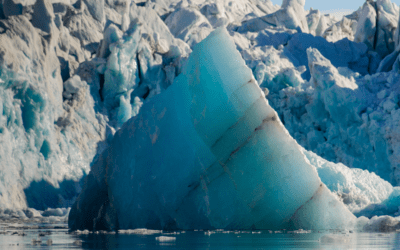
Despite these standards existing and being fully actionable the largest maritime disaster to date still occurred, the sinking of the Titanic. While it is known that the Titanic sank because it hit an iceberg, the non-conformance of product standards is also brought into question.
ISO 3834:2021 Quality requirements for fusion welding of metallic materials
ISO 3834:2021 is the international standard for the quality requirements for fusion welding of metallic materials. The ISO 9001:2015 standards state that, where necessary, special processes shall be identified, therefore the ISO 3834:2021 standard is an excellent way to meet these requirements. This is generally applied to the manufacturing of a variety of products that can range from simple to complex. Examples hereof include pressure vessels, domestic and agricultural equipment, bridges, cranes, and transport vehicles.